

If you have ever clicked a link and watched a page struggle to load, you know exactly how speed feels from the other side of the screen. Even a short delay creates doubt. People wonder if the site is broken, if it is safe, or if they should just go back and try another option. Website speed is not a technical vanity metric. It is a direct part of trust, experience, and conversion.
For business owners, performance is about how smoothly your website behaves during real use. Pages should open quickly, buttons should respond instantly, and nothing should jump around while someone is trying to read or click. When speed and performance are handled properly, visitors stay longer, complete more forms, and move through checkout with confidence.
Speed Is Not a One Time Task
Many websites start fast. They are freshly built, lightly loaded, and carefully tested. Over time, things change. New pages are added, images grow heavier, plugins accumulate, tracking scripts pile up, and marketing campaigns bring more traffic than before. None of this is wrong. It is growth. But without regular care, that growth slowly drags performance down.
Speed problems rarely appear overnight. They drift in quietly. A page that used to load instantly now takes a few seconds. A form feels slightly sluggish. A checkout pauses just long enough for doubt to creep in. Performance maintenance is about noticing and correcting these small changes before they turn into obvious problems.
What Visitors Actually Notice
From a visitor’s perspective, performance is simple. They notice whether the site feels quick or slow, smooth or clumsy. They do not think in terms of servers, scripts, or file sizes. They feel the experience.
A fast website feels confident. It responds immediately when someone clicks. It loads content in a stable way that does not shift text or buttons around. A slow website feels uncertain. Even if the information is good, the experience creates friction that pushes people away.
This matters even more on mobile devices, where connections vary and patience is shorter. Performance maintenance helps ensure your site feels reliable no matter how someone reaches it.
Performance and Business Outcomes
Speed affects almost every business goal tied to your website. When pages load quickly, visitors are more likely to stay, read, and engage. When interactions feel smooth, people are more comfortable filling out forms or completing purchases. When performance is steady, marketing efforts work harder because fewer visitors drop off before seeing your message.
Search engines also pay attention to performance signals. They look at how real users experience your pages over time. Sites that consistently feel fast and stable are rewarded with better visibility, while slow and jumpy pages struggle to compete.
Performance maintenance is not about chasing perfect scores. It is about protecting real outcomes like leads, bookings, sales, and return on advertising spend.
Why Performance Depends on Ongoing Maintenance
Website speed is affected by many moving parts. Images need to be properly sized and optimized. Caching systems need to be refreshed so visitors see ready to serve versions of pages. Hosting resources must be appropriate for the traffic you receive. Updates to WordPress, themes, and plugins must be applied carefully so performance improvements are not lost.
Without maintenance, small inefficiencies pile up. An uncompressed image here, an extra script there, a plugin doing more than it should. Over time, these tiny issues add seconds to load times and make the site feel heavy.
Regular performance care keeps things tidy. It removes unnecessary weight, ensures systems are working as intended, and keeps your site responsive as it grows.
Core Web Vitals
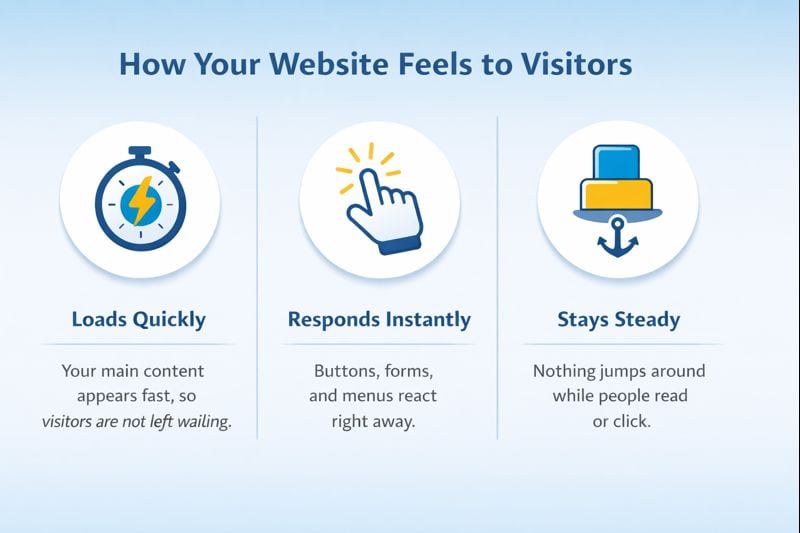
You may hear about Core Web Vitals and feel tempted to tune out. The idea itself is simple. Google measures how real visitors experience your website and checks three basic things.
First, how quickly the main content becomes visible. People want to see something useful right away. Second, how fast the site reacts when they interact with it. Clicking a button or opening a menu should feel instant. Third, how stable the page feels while loading. Text and buttons should not jump around unexpectedly.
These signals are not measured once. They are collected over time from real users. That is why performance maintenance matters. A one time optimization helps, but steady care keeps these experiences consistently positive.
Hosting and Infrastructure Matter
Performance is not just about what happens inside WordPress. Your hosting environment plays a major role. A fast, well configured server with modern software gives your site a solid foundation. Poor hosting can undo even the best optimization work.
Maintenance includes keeping an eye on server health, resource usage, and response times. As traffic grows, hosting needs may change. Adjusting early prevents slowdowns during busy periods and keeps the site stable during campaigns or promotions.
The Role of Caching and Content Delivery
Caching allows your website to serve ready made versions of pages instead of rebuilding them for every visitor. This dramatically improves speed and reduces server strain. A content delivery network can take this further by serving content from locations closer to your visitors.
These systems need occasional attention. Caches should be cleared after updates so changes appear correctly. Configurations should be reviewed as the site evolves. Performance maintenance ensures these tools continue working for you rather than quietly causing confusion.
Speed for Online Stores and Booking Sites
Performance matters even more when money is involved. Slow category pages, delayed checkout steps, or laggy booking calendars create hesitation at the exact moment you want confidence.
For ecommerce and booking websites, performance maintenance focuses on keeping product pages fast, carts responsive, and confirmation steps smooth. Small improvements here often have a direct impact on completed purchases and reduced abandonment.
A Calm Monthly Performance Check
Keeping a website fast does not require constant attention. A short, consistent routine works best. Each month, it helps to review a few key pages, capture basic speed measurements, and note any changes. If something feels slower than before, it can be addressed early while the fix is still small.
This routine pairs naturally with updates and backups. After updates are applied safely, performance is checked. If a change affects speed, it is corrected before visitors notice.
What a Well Maintained Site Feels Like
When performance is handled properly, the experience becomes invisible in the best way. Pages open quickly. Interactions feel smooth. Customers trust the site without thinking about why. Support messages about slowness disappear. Marketing efforts feel more effective.
The website becomes something you can rely on rather than worry about.
The Bigger Picture
Speed and performance are not about technical perfection. They are about respect for your visitors’ time and attention. A fast, stable website signals professionalism and care. It tells customers that you value their experience from the very first click.
With regular performance maintenance, your website stays ready for growth, traffic spikes, and new opportunities. It feels calm, capable, and dependable, even as the business behind it evolves.

[…] Speed is trust. When your pages open quickly and feel smooth, people stay, browse, and buy. When they hesitate, even for a moment, visitors back out, ad clicks are wasted, and support messages climb. The tricky part is that speed doesn’t slip all at once; it drifts. New images get heavier, a plugin adds a little delay, a campaign lands more traffic than the site can comfortably serve. Without routine care, those small drifts add up to a slow, jittery experience. […]