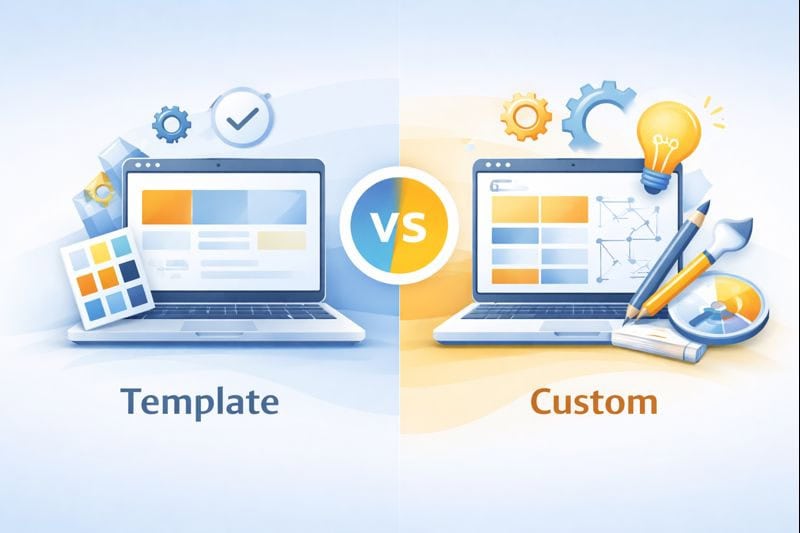
If you are planning a new website or thinking about improving an existing one, this question usually shows up early: should you use a ready-made template or invest in a custom design? It is a fair question, and there is no single right answer for everyone. Both options can work well when chosen for the right reasons.
The goal of this article is not to push you in one direction. It is to help you understand what each option really offers, where each one shines, and how to decide based on your business needs today and where you want to go next.
Why This Decision Matters More Than It Seems
Your website is often the first serious interaction someone has with your business. Before a call, before an email, before a purchase, people judge credibility, clarity, and professionalism in seconds. The way your site is built influences not just how it looks, but how flexible it is, how fast it feels, how easily it can grow, and how well it supports conversions.
Choosing between a template and a custom design is really about choosing how much structure you want upfront and how much freedom you will need later.
What a Website Template Really Is
A website template is a pre-designed layout that you customize with your own content, colors, and images. Many modern templates are well designed, responsive, and built to cover common business needs.
Templates are popular because they are quick to launch and cost-effective. They give you a clear structure from day one and remove many design decisions that can slow a project down. For new or smaller businesses, this can be a huge advantage.
When templates work well, they feel clean, professional, and familiar in a good way. Visitors know how to navigate them, and owners can update content without much friction.
When a Template Is the Right Choice
Templates are a strong fit when your needs are simple and predictable. If your website’s main job is to present basic information, explain services, and collect inquiries, a well-chosen template can do that job very well.
They are especially useful when time or budget is tight, or when you want to validate an idea before investing further. Templates can also work nicely when branding is still evolving and you do not want to lock into a highly specific visual identity too early.
Used thoughtfully, templates are not shortcuts. They are practical tools.
The Limitations of Templates Over Time
Where templates start to show cracks is not usually on day one. It happens as a business grows.
As you add more services, more content, or more complex features, the template’s structure can begin to feel restrictive. Layouts may not adapt well to unique content. Design changes that seem simple can require workarounds. Performance can suffer if the template includes features you do not use but still have to load.
Another common challenge is differentiation. When many businesses use similar templates, standing out visually and structurally becomes harder, even with good content.
What Custom Website Design Really Means
Custom design does not mean reinventing everything from scratch for the sake of it. It means designing your website around your specific goals, content, and audience.
A custom design starts with questions instead of layouts. What should visitors understand first? What actions matter most? How should the site grow over time? The answers shape the structure, flow, and visuals of the site.
Custom design allows layouts to follow your content instead of forcing your content into predefined boxes. It also allows performance, accessibility, and usability to be considered from the beginning rather than adjusted later.
When Custom Design Makes Sense
Custom design becomes valuable when your website plays an active role in your business. If your site needs to support lead generation, conversions, bookings, ecommerce, or strong brand differentiation, custom design often pays off.
It is also the better option when you have unique content, a clear brand direction, or workflows that do not fit neatly into a template’s structure. As marketing efforts increase, custom design gives you the flexibility to test, refine, and improve without fighting against rigid layouts.
Cost Is Not Just About the Build
Templates usually cost less upfront. Custom design requires more planning, collaboration, and time.
However, long-term cost matters too. A template that needs frequent workarounds, redesigns, or performance fixes can quietly become expensive. A custom site that is built with growth in mind can be easier to maintain and adapt over time.
The right question is not which option is cheaper today, but which one supports your business more comfortably over the next few years.
How This Choice Affects Maintenance and Performance
Templates often come bundled with extra features to appeal to a wide audience. Those extras can affect performance and make updates more delicate. Custom designs can be leaner, loading only what is needed.
From a maintenance perspective, clarity matters. A site that is designed and built intentionally is usually easier to update, troubleshoot, and optimize. That does not mean templates are bad, only that they require careful selection and ongoing attention.
A Practical Way to Decide
Instead of asking which option is better, ask a few simple questions.
Do you expect your site to change significantly in the next year? Do you need flexibility in layout and structure? Does standing out visually matter for your industry? Will your website play a role in driving revenue, not just presenting information?
If most answers point toward simplicity and speed, a template may be the right place to start. If they point toward growth, differentiation, and long-term use, custom design is worth considering.
The Calm Takeaway
Templates are not wrong. Custom design is not always necessary. The best choice depends on your business stage, goals, and expectations.
What matters most is that your website feels clear, trustworthy, fast, and easy to use. Whether that comes from a template or a custom design, the real success comes from choosing intentionally and planning for the future.
If you are unsure which path fits your situation, a short conversation can often bring clarity. The right decision should feel supportive, not stressful.
