If you have ever hired someone to build a website and felt confused about what you were actually paying for, you are not alone. One of the most common sources of misunderstanding is the difference between website design and website development. They are often mentioned together, sometimes used interchangeably, but they are not the same thing. Both matter, and both play very different roles in how your website looks, works, and grows.
Understanding this difference does not require technical knowledge. It simply helps you ask better questions, set clearer expectations, and make smarter decisions for your business.
Think of a Website Like a Physical Space
An easy way to understand the difference is to imagine opening a new store or office.
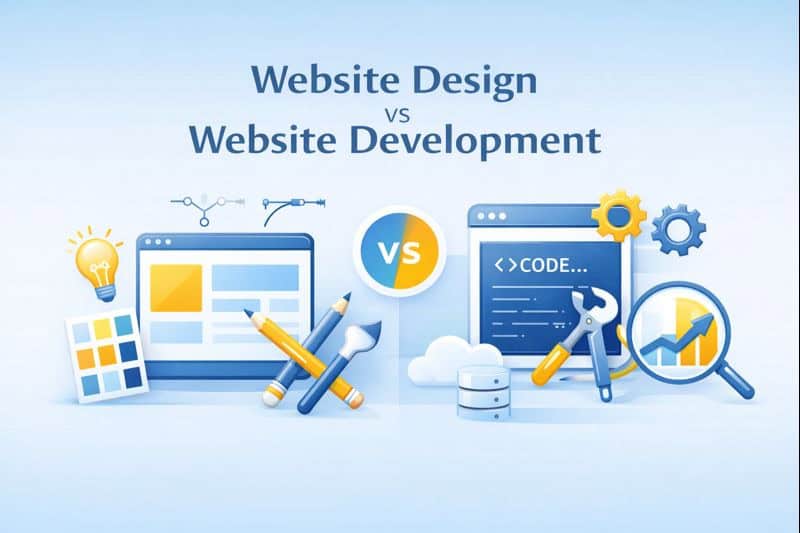
Website design is everything people see and feel. It is the layout, colors, typography, spacing, imagery, and overall flow. Design shapes first impressions. It answers questions like: Does this feel professional? Is it easy to understand? Do I trust this business?
Website development is everything that makes the space function. It is the wiring, plumbing, doors, locks, lighting controls, and back room systems. Development ensures pages load correctly, forms submit, bookings are saved, payments process, and the site behaves reliably across devices.
A beautiful storefront without working doors frustrates visitors. A perfectly wired building with no thought to layout or comfort also fails. Successful websites need both working together.
What Website Design Really Covers
Website design focuses on how your site communicates visually and emotionally. Good design guides visitors without them noticing. It helps people find what they need quickly and understand what you offer.
Design includes decisions such as page layout, section spacing, font choices, color usage, button styles, imagery, and visual hierarchy. It also includes user experience considerations like how someone moves from page to page, where their eyes naturally land, and how clear the next step feels.
Strong design is not about trends or decoration. It is about clarity. A well designed website feels calm, intentional, and easy to use. Visitors should never feel lost or overwhelmed.
What Website Development Really Covers
Website development focuses on how your site works behind the scenes. It turns designs into a functioning website that performs reliably in real life.
Development includes building templates, connecting databases, setting up content management, configuring forms, integrating payment systems, managing user accounts, and ensuring everything works across browsers and devices. It also covers performance, security basics, and how easily the site can be updated later.
Good development is often invisible. When everything works smoothly, no one notices it. When it is done poorly, issues show up quickly in the form of broken layouts, slow pages, errors, or unreliable features.
Why Business Owners Often Get Confused
Design is easy to see. Development is not. That makes it tempting to judge a website only by how it looks. Many projects focus heavily on visuals while underestimating the importance of what happens underneath.
This is where frustration starts. A site may look great but feel slow, difficult to update, or fragile when changes are needed. On the other hand, a site may function well but fail to connect with visitors because the design lacks clarity or polish.
Understanding that design and development solve different problems helps explain why both are needed, especially as a business grows.
Where Design and Development Meet
The best websites are built when design and development inform each other.
Design decisions affect development. Complex animations, oversized images, or unconventional layouts can slow down a site or complicate maintenance if not planned carefully.
Development decisions affect design. The choice of platform, theme structure, or page builder influences how flexible layouts are and how easily content can evolve.
When both sides work together from the beginning, the result is a site that looks good, performs well, and stays manageable over time.
How This Affects Your Website Long Term
A website is not a one time project. You will update content, add services, launch campaigns, and adapt to changes in your business. If design and development are not aligned, these updates become harder than they should be.
Good design creates a flexible visual system that can grow. Good development creates a solid foundation that supports changes without breaking.
When either side is ignored, maintenance becomes stressful and expensive. Small changes take too long. New ideas feel risky. Confidence in the website drops.
Common Mistakes to Watch For
One common mistake is choosing a provider based only on visual samples without asking how the site is built or maintained. Another is focusing entirely on technical features while overlooking how real people experience the site.
A third mistake is treating design and development as separate phases that never overlap. This often leads to rework, compromises, and missed opportunities.
What to Ask Before Starting a Project
You do not need technical language to ask smart questions. Simple ones work best.
Ask how the design will support your goals. Ask how easy it will be to update content later. Ask how performance, security, and future growth are handled. Ask what happens after launch.
Clear answers signal a thoughtful approach that values both design and development.
The Business Owner Takeaway
Website design and website development are not competing services. They are complementary disciplines.
Design shapes how your brand is perceived and how comfortable visitors feel. Development ensures the experience works smoothly and reliably every day. When both are done well, your website becomes a tool you trust rather than something you worry about.
Understanding the difference helps you invest wisely, communicate clearly with your team or agency, and build a website that supports your business for years to come.
Final Thought
A successful website does not just look good or just work well. It does both. When design and development move in sync, the result feels natural, dependable, and ready to grow along with your business.
